
Get clear on who the product is for
Before you promote anything, define the specific customer your product is designed to help. The clearer the audience, the easier it becomes to write your messaging, choose your channels, and explain why the product matters.
Focus on the problem they are trying to solve, the result they want, and why your product is a practical next step.
Turn the product into a clear offer
Customers are not only buying a file, template, course, or download. They are buying the outcome they believe it can help them achieve.
Make the offer easy to understand by clearly explaining what is included, what result it supports, and why it is worth paying for.
- State exactly what the customer receives.
- Describe the result or transformation the product supports.
- Keep the offer simple enough to understand in a few seconds.
Build interest before launch day
Do not wait until the product is live before talking about it. Start sharing the problem, the idea behind the product, and the process of creating it ahead of launch.
Behind-the-scenes updates, previews, short demonstrations, and educational content can help your audience understand what is coming and why it is relevant.
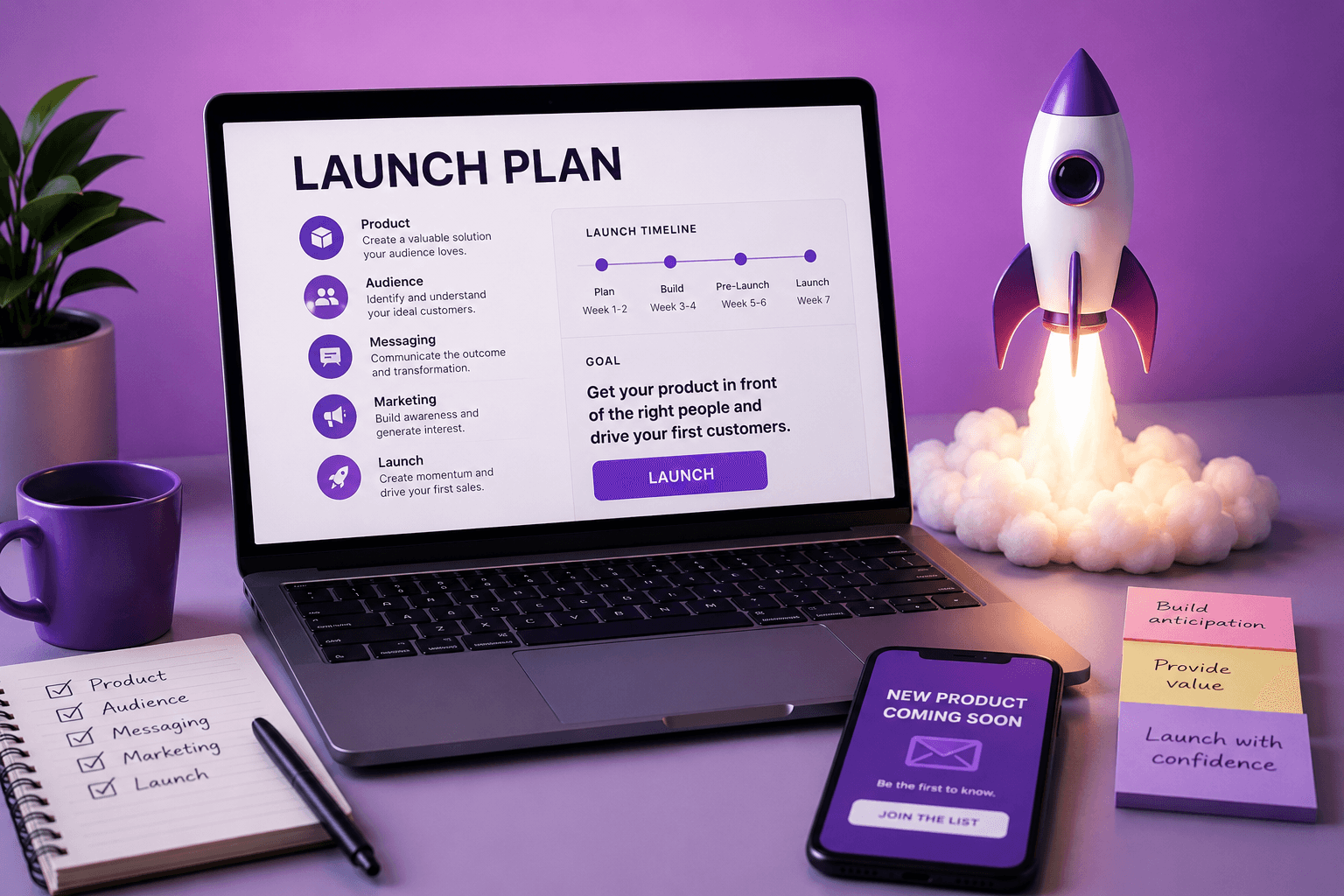
Create a simple launch plan
Choose a small number of channels where your audience already pays attention. Email, social media, communities, partners, and affiliates can all work, but you do not need to use everything at once.
The goal is consistent communication in the places most likely to reach the right people.
- Prepare your product page and checkout flow.
- Plan a short sequence of launch messages.
- Use real urgency such as a launch bonus or introductory offer.
- Test the purchase and delivery experience before going live.
Pay attention to your first customers
Your first customers can show you what is working and what needs improvement. Look at what convinced them to buy, which questions they asked, and which parts of the product they value most.
Use that feedback to improve your product page, onboarding, messaging, and future launches.
Keep marketing after the launch
A launch should create momentum, not mark the end of promotion. Reuse the strongest launch ideas as ongoing content, tutorials, customer stories, demonstrations, and email sequences.
The first launch gives you information. Consistent marketing helps turn that information into repeatable sales.